Preserving Our Stories, Honoring Our Heritage, and Illuminating the Hope of Human Progress
Let us remember…
One God. One Nation. One Humanity.
Faith as our foundation. Courage as our strength. Honor as our responsibility. Love as our greatest inheritance.
The Shining Light of Hope
“But the path of the just is as the shining light, that shineth more and more unto the perfect day.” — Proverbs 4:18 (KJV)
The passing of generations leaves behind more than historical accounts, national achievements, or monuments erected in remembrance of those who came before us.
It leaves an inheritance.
An inheritance of faith, courage, honor, devotion, sacrifice, and testimonies that continue to illuminate the path of humanity.
Some stories are preserved upon the pages of books. Others are engraved upon stone, carried through generations, or quietly held within the hearts of those who have witnessed the extraordinary unfolding of history.
Each invites us to look beyond what is immediately visible and discover the convictions, spiritual foundations, and enduring principles that have influenced the course of nations.
How intriguing it is that, as humanity advances in knowledge, technology, and discovery, we are continually reminded of something far greater: the cultivation of wisdom, righteousness, compassion, and love.
For what is the purpose of human progress if we forget the dignity of those whom progress is intended to serve?
The Hope of Human Progress — Faith, Wisdom, and Moral Responsibility
William Henry Seward (1801–1872), Secretary of State under Presidents Abraham Lincoln and Andrew Johnson, is remembered for negotiating the purchase of Alaska from Russia in 1867.
In The American Patriot’s Bible, a reflection attributed to Seward connects the hope of human progress with the influence of Scripture.
This perspective invites us to contemplate an enduring question:
What truly constitutes progress?
Is it measured solely through prosperity, territorial expansion, economic strength, or scientific discovery?
Or must progress also be measured through the character of a people, the integrity of their institutions, and their willingness to pursue justice?
“Hope deferred maketh the heart sick: but when the desire cometh, it is a tree of life.” — Proverbs 13:12 (KJV)
Hope is more than an expectation of what tomorrow may bring.
It is the strength that sustains us when the path becomes uncertain, the courage that enables us to persevere, and the assurance that even difficult seasons may become opportunities for growth.
Like a tree whose roots deepen beneath the earth, the human spirit develops resilience through patience, faith, and perseverance.
And when hope bears fruit, its blessings may extend far beyond one individual, touching families, communities, and generations yet to come.
Righteousness Exalts a Nation
“Righteousness exalteth a nation: but sin is a reproach to any people.” — Proverbs 14:34 (KJV)
The strength of a nation cannot be measured solely by its wealth, military capabilities, or political authority.
Its moral character matters.
Righteousness calls us to cultivate honesty, integrity, justice, humility, compassion, and respect for the dignity of every human being.
Patrick Henry, remembered for his role in the American Revolution and his advocacy of liberty, belongs among the historical figures whose convictions invite reflection upon conscience, moral responsibility, and freedom.
Yet history also reminds us that noble principles must be examined alongside the actions of those who proclaimed them.
A nation’s inheritance includes its accomplishments and contradictions, its courage and failures, its victories and unfinished responsibilities.
To honor history is not to overlook its difficulties, but to learn from them with wisdom and humility, preserving what is good while seeking to correct what is unjust.
The Responsibility of a Blessed Nation — Prayer, Participation, and Perseverance
In the midst of the American Civil War, President Abraham Lincoln issued a proclamation on March 30, 1863, calling the nation to a day of humility, fasting, and prayer.
Within that solemn declaration, he reminded his fellow Americans:
“We have been the recipients of the choicest bounties of Heaven.”
These words were not merely an acknowledgment of prosperity. They formed part of an appeal to national humility, gratitude, repentance, and dependence upon Almighty God.
Lincoln recognized that material abundance and national advancement could never replace the spiritual responsibility of a people to examine their conscience and remember the source of their blessings.
What a meaningful reflection for every generation.
To call a land of freedom our home is both a privilege and a responsibility. To inherit the sacrifices of those who defended liberty, established institutions, and labored toward a more just society is to receive a legacy that must never be taken for granted.
Yet gratitude must be accompanied by discernment.
For a nation may advance in prosperity while neglecting the moral principles that give its accomplishments lasting meaning.
Drawing upon the devotional reflections presented in The American Patriot’s Bible, we are invited to consider three enduring responsibilities: to pray, to participate, and to persevere.
Pray — The Humility of a Nation Before Almighty God
Prayer is an expression of faith, surrender, gratitude, and hope.
Throughout American history, moments of conflict, suffering, and uncertainty have inspired public calls to prayer, including Lincoln’s proclamation during the Civil War.
But prayer is not reserved solely for times of national distress.
It is also an invitation to examine our hearts, seek wisdom, acknowledge our shortcomings, and ask that mercy and grace guide our decisions.
May we remember that the blessings we receive are not occasions for pride, but opportunities for thanksgiving and service.
Let us bend our knees in humility, lift our hearts in gratitude, and pray for wisdom, reconciliation, justice, and enduring peace.
Participate — The Responsibility to Become Instruments of Change
Faith also calls us to examine how we live.
It is easy to observe what appears broken, unjust, or neglected within society. Yet meaningful change requires more than criticism.
It requires participation.
Whether through service to our communities, responsible civic engagement, education, charitable works, or the simple act of extending kindness to someone in need, each person possesses opportunities to contribute to the common good.
We need not agree upon every question to recognize the importance of serving one another with integrity and respect.
For participation begins when we recognize that the responsibility for building a better future cannot be entrusted entirely to someone else.
Let our convictions be reflected not merely in what we say, but in the good we are willing to accomplish.
Persevere — The Courage to Remain Steadfast in Righteousness
The pursuit of justice, reconciliation, and lasting peace often requires extraordinary patience.
There will be moments when progress appears distant, when discouragement weighs heavily upon the heart, and when the path toward restoration seems uncertain.
Yet perseverance reminds us that meaningful change is not always accomplished through a single extraordinary act.
Sometimes it is achieved through countless faithful steps.
Through the courage to continue when others have abandoned hope.
Through the humility to learn when circumstances challenge our understanding.
And through the steadfast conviction that righteousness, compassion, and truth remain worthy of our devotion.
“And let us not be weary in well doing: for in due season we shall reap, if we faint not.” — Galatians 6:9 (KJV)
How beautifully these three responsibilities come together.
Prayer prepares the heart.
Participation gives expression to our convictions.
Perseverance sustains us through the journey.
And love gives meaning to them all.
Jesus taught His followers to become the salt of the earth and the light of the world (Matthew 5:13–16).
What a beautiful invitation to carry our faith beyond words and into the places where life unfolds: our homes, families, neighborhoods, schools, workplaces, and communities.
May we stand in the gap through prayer, service, and compassion.
May we seek the restoration of what has been broken, the protection of those who are vulnerable, and the reconciliation of those who have become divided.
And may we never forget that the inheritance of freedom carries with it the responsibility to exercise that freedom with wisdom, humility, and love.
For a nation’s enduring strength is revealed not only in the blessings it receives, but in the righteousness, courage, and compassion with which its people respond.
In God We Trust — The Heritage of a Nation
On July 30, 1956, President Dwight D. Eisenhower signed legislation establishing “In God We Trust” as the official national motto of the United States.
These words became part of a longstanding American tradition of public references to divine providence.
The Great Seal of the United States bears the Latin expression Annuit Cœptis, traditionally understood as an acknowledgment that Providence has favored the nation’s undertakings.
And in 1954, the words under God were incorporated into the Pledge of Allegiance.
These expressions preserve the convictions and aspirations of generations who understood faith as a source of moral responsibility, personal character, and public service.
For the inheritance of a nation is not preserved through words alone.
It is carried forward through the conduct of its people, the wisdom of its leadership, and the principles cultivated in the hearts of future generations.
Monuments to American Patriotism — Testimonies Preserved in Stone
In The American Patriot’s Bible, edited by Dr. Richard G. Lee, the historical feature Monuments to American Patriotism draws attention to religious inscriptions, biblical imagery, and commemorative works preserved throughout Washington, D.C.
From the halls of Congress to the nation’s memorials, these monuments invite reflection upon the convictions of earlier generations and the enduring questions of faith, justice, liberty, and moral responsibility.
The Washington Monument — Laus Deo
At the summit of the Washington Monument, the aluminum capstone bears the Latin words Laus Deo, meaning Praise Be to God.
Facing the rising sun, this inscription offers a striking image of reverence and remembrance.
Within the monument, commemorative stones preserve additional religious messages, including biblical references to holiness, the study of Scripture, righteous remembrance, and the responsibility of raising children in wisdom.
These inscriptions invite us to contemplate an inheritance that reaches beyond stone and architecture: the values cultivated in the hearts of future generations.
The United States Capitol — Faith, Law, and Public Service
Within the House Chamber, the words In God We Trust appear above the Speaker’s rostrum.
Twenty-three marble relief portraits honor historical lawgivers, including Moses, who is uniquely depicted facing forward.
Within the Capitol Rotunda, two historical paintings offer further opportunities for reflection.
The Baptism of Pocahontas, painted by John Gadsby Chapman, portrays a religious event in colonial Virginia.
Embarkation of the Pilgrims, painted by Robert Walter Weir, depicts the Pilgrims gathered in prayer before their departure from Holland in 1620.
These works preserve particular interpretations of early American history, including religious devotion, migration, cultural encounters, and the search for new beginnings.
They also remind us that America’s beginnings must be understood in their fullness, including the experiences of Indigenous peoples and others profoundly affected by colonization.
For the preservation of heritage requires both remembrance and understanding.
The Congressional Prayer Room — In Thee Do I Put My Trust
Within the Capitol, the Congressional Prayer Room provides a quiet setting for prayer and contemplation.
Its stained-glass window depicts George Washington kneeling in prayer beneath the inscription:
“This Nation Under God.”
The window also incorporates Psalm 16:1:
“Preserve me, O God: for in thee do I put my trust.”
Within a building devoted to public deliberation, this setting offers an image of stillness, humility, and reflection.
For leadership is not merely the exercise of authority.
It is the responsibility to exercise judgment with wisdom, integrity, and concern for the lives entrusted to one’s care.
The Jefferson Memorial — Liberty and the Freedom of Conscience
The Jefferson Memorial preserves reflections upon liberty, divine providence, education, government, and the rights of conscience.
Thomas Jefferson’s declaration of opposition to tyranny over the human mind is engraved beneath the memorial’s dome.
Other inscriptions draw from his writings concerning life, liberty, and divine justice.
Jefferson’s legacy also invites us to consider the complexity of American history, including the contradiction between his advocacy of liberty and his participation in slavery.
The preservation of freedom requires more than eloquent declarations.
It calls for the courage to recognize injustice, the humility to examine our convictions, and the determination to extend the dignity of liberty to all.
The Lincoln Memorial — A New Birth of Freedom
Within the Lincoln Memorial, the Gettysburg Address and the Second Inaugural Address preserve two extraordinary moments in American history.
In November 1863, Abraham Lincoln called upon a nation devastated by civil war to honor the sacrifices of the fallen through a renewed commitment to freedom and representative government.
In March 1865, as the war approached its conclusion, Lincoln reflected upon slavery, suffering, divine judgment, and the need for reconciliation.
Rather than concluding with a call for vengeance, he appealed to charity, mercy, and the healing of a wounded nation.
The courage to defend what is right must be accompanied by the humility to seek reconciliation and the compassion to care for those who have suffered.
Healing requires truth, justice, responsibility, and a willingness to restore what has been broken.
“Blessed are the peacemakers: for they shall be called the children of God.” — Matthew 5:9 (KJV)
The Supreme Court — Justice, Wisdom, and the Foundations of Law
The Supreme Court Building contains artistic representations of Moses and the Tablets of the Law, alongside figures from other ancient legal traditions.
On the eastern façade, sculptor Hermon A. MacNeil depicted Moses, Confucius, and Solon, representing different historical influences upon the development of law.
Within the building, additional symbols of the Tablets of the Law appear in architectural details and courtroom decorations.
These representations remind us that human societies have long wrestled with questions of justice, accountability, responsibility, and the proper exercise of authority.
Yet the strength of law depends not merely upon its inscription or interpretation, but upon the commitment to administer justice fairly.
For liberty requires justice, justice requires integrity, and integrity calls for moral courage.
A Shining City Upon a Hill — The Destiny of Leadership and the Responsibility of Influence
On January 25, 1974, Ronald Reagan delivered his address, We Will Be as a City upon a Hill, reflecting upon the history of the United States and the responsibilities accompanying its influence upon the world.
In his concluding remarks, Reagan declared:
“We cannot escape our destiny, nor should we try to do so.”
He recalled the nation’s beginnings in Philadelphia, connecting the founding of the American republic with the responsibilities of international leadership that emerged over the following two centuries.
Turning his attention to the aftermath of World War II, Reagan reflected upon a world deeply wounded by conflict, destruction, displacement, and uncertainty.
He described America’s economic strength as a source of stability during that difficult period and recalled words he attributed to Pope Pius XII, praising the American people’s capacity for generosity and unselfish service.
Among those words was the solemn expression:
“Into the hands of America God has placed the destinies of an afflicted mankind.”
Reagan’s address presented American leadership as a historical calling, shaped by the nation’s founding principles and the challenges of the twentieth century.
Yet such a calling invites continual reflection.
What is the true measure of a nation’s influence, if not the wisdom with which it exercises its strength, the justice it seeks to preserve, and the compassion it extends to those entrusted to its care?
The biblical imagery of a city upon a hill offers a spiritual connection.
“Ye are the light of the world. A city that is set on an hill cannot be hid.” — Matthew 5:14 (KJV)
A light does not shine merely to be admired.
It illuminates the path before us, offering direction amid uncertainty and reassurance amid darkness.
Likewise, leadership is not simply the possession of authority, but the responsibility to exercise it with discernment, humility, courage, and compassion.
The aftermath of World War II provides historical examples of international cooperation and reconstruction, including American participation in the Marshall Plan.
Such endeavors remind us that national strength may be directed toward rebuilding what conflict has destroyed and creating opportunities for future generations.
Yet the exercise of influence also requires accountability, for even noble aspirations must be measured against their consequences.
Power must be accompanied by wisdom. Courage must be guided by righteousness. And leadership must never lose sight of the humanity it is entrusted to serve.
For influence reaches its noblest purpose when it becomes an instrument of restoration, justice, and peace.
The Divine Teacher and the Resilient Vessel — The Measure of Faith and the Purpose of Humanity
How extraordinary it is to contemplate the wisdom of our Heavenly Father, the Creator of humanity, who, through His infinite love, continues to shape, instruct, and prepare His children for the purposes entrusted to them.
Throughout Scripture, teaching is far more than the transmission of knowledge.
It is an invitation to grow in wisdom, understanding, discernment, righteousness, and love.
The Greek word Didáskalos (διδάσκαλος) means teacher or instructor, one who imparts knowledge and guides others toward understanding.
In the Gospels, Jesus Christ is addressed as Teacher, revealing through His words, actions, compassion, and sacrifice the relationship between divine instruction and a life devoted to serving others.
The Greek word Métron (μέτρον) means measure, standard, or portion. In Romans 12:3, the Apostle Paul speaks of the measure of faith, encouraging humility and sound judgment rather than pride.
And then we encounter Skeûos (σκεῦος), meaning vessel or instrument.
What a remarkable connection.
The Creator, the Teacher, the measure entrusted to us, and the vessel prepared to carry His gifts.
“But we have this treasure in earthen vessels, that the excellency of the power may be of God, and not of us.” — 2 Corinthians 4:7 (KJV)
A vessel is formed through patience, pressure, and purpose.
It may endure seasons of hardship, uncertainty, and transformation, yet through those experiences become stronger, more resilient, and better prepared to fulfill its purpose.
So, too, are individuals, families, communities, and nations shaped by their experiences.
Some vessels carry wounds that remain unseen. Others endure extraordinary pressure.
Yet the value of the vessel is not determined merely by its outward appearance, but by the treasure it carries and the purpose for which it is prepared.
Wisdom requires humility, and humility opens the heart to understanding.
The greatest teachers do more than impart information. They cultivate discernment, integrity, compassion, and the willingness to learn.
And the greatest lessons are not always taught through words.
Sometimes they are revealed through sacrifice, forgiveness, perseverance, reconciliation, and the quiet courage of those who continue to serve despite life’s difficulties.
The measure of our influence is not found solely in what we possess, but in what we faithfully carry, cultivate, and share.
For the Creator is the source of life, Christ is our divine Teacher, and humanity is invited to become a living testimony of His wisdom, grace, and compassion.
One God. One Nation. One Humanity.
Within this reflection, these words express devotion to one Creator, gratitude for the heritage and responsibilities of a nation, and recognition that human dignity extends beyond every earthly boundary.
Our histories, cultures, and traditions may differ, yet our responsibilities toward one another remain profoundly connected.
The Defense of Faith — Love Above All
Faith is not defended through hostility, contempt, or the rejection of another person’s dignity.
Its most enduring testimony may be found in the courage to remain steadfast in truth while extending compassion to others.
To defend faith is also to preserve freedom of conscience, protect the vulnerable, uphold justice, and demonstrate through our conduct the principles we profess.
The Apostle Paul reminds us:
“And now abideth faith, hope, charity, these three; but the greatest of these is charity.” — 1 Corinthians 13:13 (KJV)
How beautifully this brings our reflections together.
Faith provides the foundation.
Hope sustains the journey.
Wisdom teaches the heart.
Courage strengthens the vessel.
Honor guides our responsibilities.
Devotion encourages perseverance.
Righteousness illuminates the path.
And love remains preeminent.
For without love, even our greatest accomplishments may lose their deepest meaning.
Without compassion, knowledge may become pride.
Without humility, strength may become oppression.
Without justice, liberty may remain an unfulfilled promise.
And without the willingness to serve, influence may become little more than the pursuit of recognition.
Preserving Our Stories — Honoring the Living Inheritance
As we contemplate the monuments of Washington, the convictions of historical leaders, the testimonies preserved within Scripture, and the sacrifices of generations who came before us, we are reminded that history is not something distant.
It is a living inheritance.
Every family carries a history.
Every nation carries an inheritance.
Every individual carries experiences that have shaped the person they are becoming.
Some stories speak of extraordinary courage. Others reveal quiet perseverance, sacrifice, forgiveness, and the remarkable ability to begin again.
Many remind us that what appears ordinary to one person may represent an extraordinary testimony of faith to another.
How important it is, then, to preserve these stories not merely as accounts of the past, but as opportunities to cultivate wisdom for the future.
For the greatest legacy is not always the monument that remains standing.
Sometimes it is the kindness remembered, the injustice corrected, the life restored, the child encouraged, the family reconciled, or the hope rekindled in someone who had nearly lost it.
The Light That Continues to Shine
We return once more to the beautiful promise of Proverbs 4:18, where the path of the just is compared to a shining light, growing ever brighter toward the perfect day.
How extraordinary that the light of one generation may continue illuminating the path of another.
The stories we preserve, the sacrifices we honor, and the lessons we embrace become part of a living inheritance—one that reminds us that the hope of human progress rests not merely in what humanity can achieve, but in what humanity can become.
May we therefore continue to cultivate wisdom without pride, courage without hostility, strength without oppression, and faith expressed through righteousness and compassion.
May the vessels remain resilient, the foundations steadfast, the light of righteousness ever brighter, and love forever preeminent.
For through faith we find courage, through wisdom we gain understanding, through righteousness we pursue justice, and through love we discover the purpose that connects us all.
One God. One Nation. One Humanity.
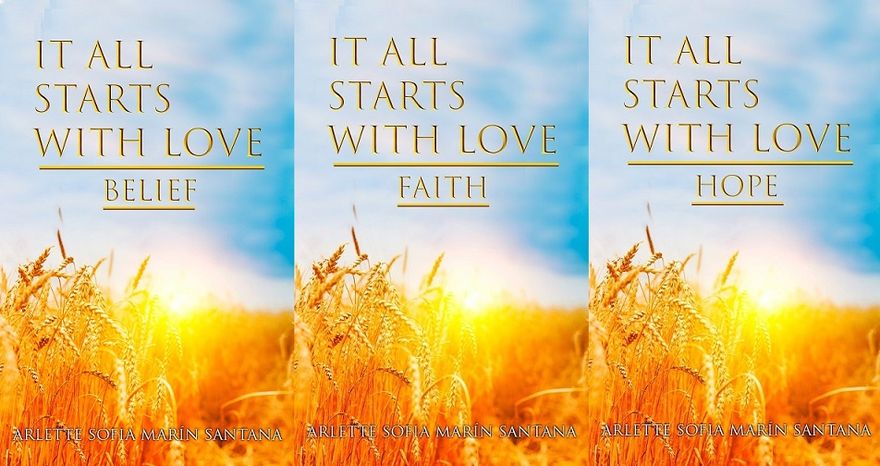
It All Starts With Love — Todo Comienza Con Amor.
References, Biblical Sources, and Editorial Acknowledgments
Biblical References
The Holy Bible — King James Version (KJV)
- Proverbs 4:18 — The shining light of righteousness.
- Proverbs 13:12 — Hope deferred and the tree of life.
- Proverbs 14:34 — Righteousness exalts a nation.
- Proverbs 10:7 — The remembrance of the just.
- Proverbs 22:6 — Teaching future generations.
- Psalm 16:1 — Trust in Almighty God.
- Matthew 5:9 — Blessed are the peacemakers.
- Matthew 5:13–16 — Salt of the earth and the light of the world.
- Romans 12:3 — The measure of faith.
- 2 Corinthians 4:7 — Treasure in earthen vessels.
- 1 Corinthians 13:13 — Faith, hope, and charity.
- Galatians 6:9 — Perseverance in doing good.
- 2 Chronicles 7:14 — Humility, prayer, and restoration.
- Micah 6:8 — Justice, mercy, and humility.
Greek Biblical Terminology
Didáskalos (διδάσκαλος) — Strong’s Greek G1320
Meaning: Teacher, instructor, or master.
Biblical context: John 13:13; Matthew 8:19.
Métron (μέτρον) — Strong’s Greek G3358
Meaning: Measure, standard, or portion.
Biblical context: Romans 12:3; Ephesians 4:7.
Skeûos (σκεῦος) — Strong’s Greek G4632
Meaning: Vessel, implement, or instrument.
Biblical context: 2 Corinthians 4:7; 2 Timothy 2:21.
Lexical reference: Strong’s Exhaustive Concordance of the Bible, Greek Dictionary.
Historical and Literary References
- Lee, Richard G., editor. The American Patriot’s Bible: The Word of God and the Shaping of America. Thomas Nelson, 2009. Historical and devotional commentary on national heritage, monuments, prayer, participation, and perseverance.
- Lincoln, Abraham. Proclamation Appointing a National Fast Day, March 30, 1863.
- National Park Service. Historical and architectural resources concerning the Washington Monument, Jefferson Memorial, and Lincoln Memorial. https://www.nps.gov
- Architect of the Capitol. Documentation concerning the Capitol Rotunda, House Chamber, Congressional Prayer Room, and architectural inscriptions. https://www.aoc.gov
- Supreme Court of the United States. Symbols of Law and East Pediment. https://www.supremecourt.gov
- Jefferson, Thomas. Letter to Benjamin Rush, September 23, 1800.
- Lincoln, Abraham. Gettysburg Address, November 19, 1863; Second Inaugural Address, March 4, 1865.
- Reagan, Ronald. We Will Be as a City upon a Hill, January 25, 1974.
- United States Congress. Public Law 84-851, July 30, 1956, establishing “In God We Trust” as the official national motto.
- Seward, William Henry. Historical reflection attributed to Seward concerning the influence of Scripture upon human progress, as discussed in The American Patriot’s Bible. Original attribution remains to be confirmed.
- Pope Pius XII. Remarks concerning American generosity and international responsibility, as quoted by Ronald Reagan in his January 25, 1974, address. Original wording and context should be checked against Vatican records.
Editorial Notes
This publication draws inspiration from biblical teachings, historical writings, American national monuments, and selected historical commentary presented in The American Patriot’s Bible, edited by Dr. Richard G. Lee.
The themes of prayer, participation, and perseverance are adapted into an original reflection inspired by the book’s devotional commentary.
The reflections concerning faith, courage, honor, devotion, the resilience of humanity, and the preeminence of love are presented as original devotional interpretations.
Historical references and religious symbolism are interpreted within the context of a faith-centered reflection rather than presented as evidence of a single religious interpretation shared by all Americans.
Historical quotations attributed to Seward and Pope Pius XII are retained with attribution to the intermediary sources in which they were encountered. Their original wording and context have not been conclusively verified.
Authorship and Editorial Acknowledgment
Written and Developed by Arlette Sofia Marin
It All Starts With Love / Todo Comienza Con Amor
Writing, Editorial, and Research Assistance: ChatGPT (OpenAI)
ChatGPT assisted with manuscript organization, language refinement, biblical terminology, historical context, and the integration of references. The author’s spiritual reflections, creative direction, and central message remain her own.
© 2026 Arlette Sofia Marin. All rights reserved.
It All Starts With Love — Todo Comienza Con Amor



Leave a Reply